Delegation framework15 Oct 2026NEW
The AI-enabled vCISO
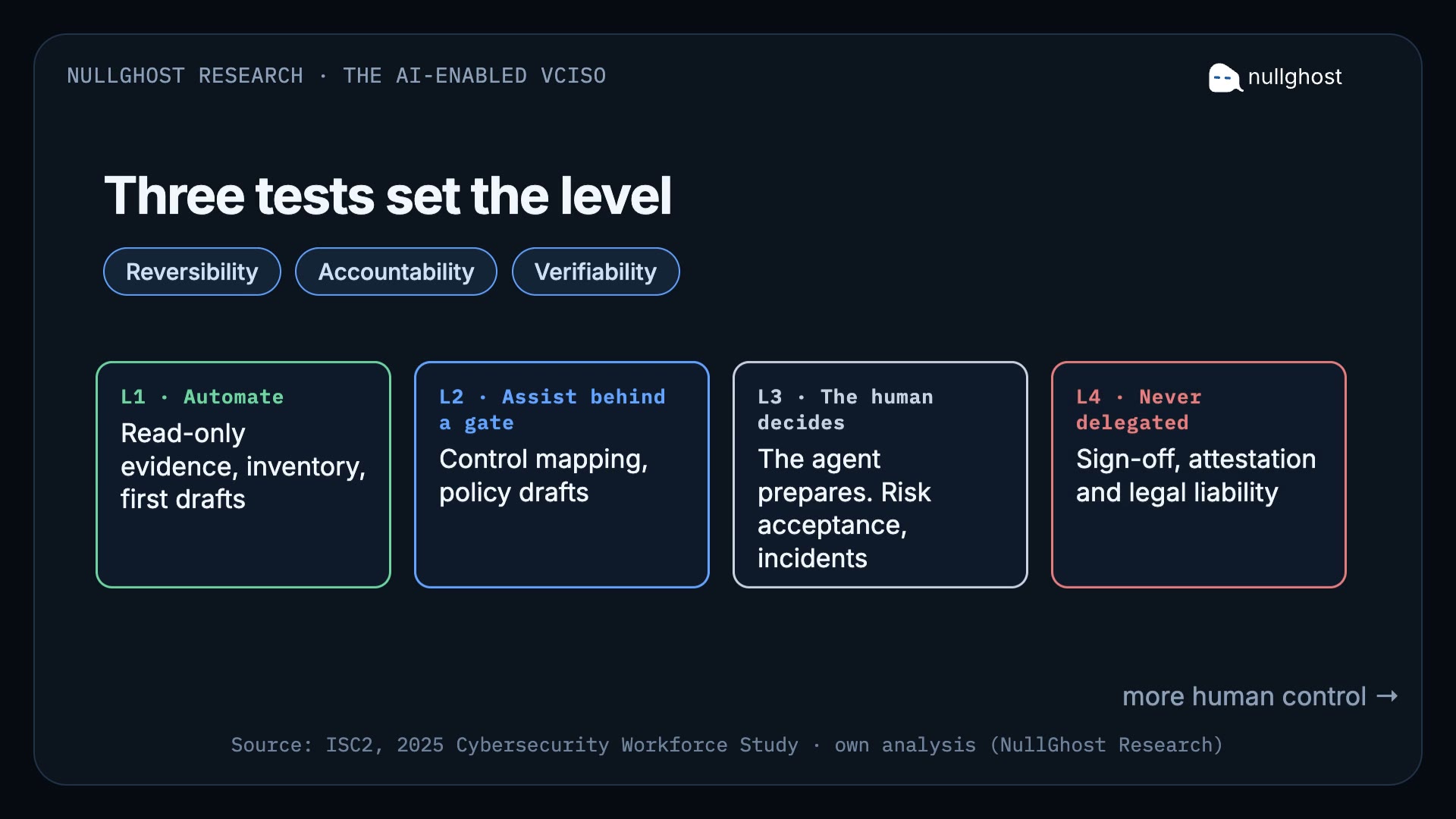
What gets delegated to an agent, what gets verified and what cannot be delegated. A four-level ladder and a measurement protocol, with explicit sources and limits.
What has been measured, what has been projected and what has been legislated. Each source is tagged by verification level and no date is promised.
METR measured the task horizon AI agents complete doubling every 131 days since 2023 (version 1.1, January 2026). METR itself calls its confidence intervals very wide. Source: METR.
It separates four things that usually get mixed: what has been measured (METR's task horizon, the International AI Safety Report 2026), what has been projected (an AI Impacts survey of 2,778 researchers, and forecasts their own authors have moved several times), what has been argued (an economic model in which automating AI research can produce explosive growth, which is a model and not an observation) and what has been legislated (no treaty in force on superintelligence; there are proposals, a public statement and a UN scientific panel that only advises).
There is solid evidence of fast, uneven progress in capabilities, and early but real evidence of deceptive behavior in test environments. In the OpenAI and Apollo Research study, anti-scheming training reduced o3's covert actions from 13% to 0.4% without eliminating them, and the authors cannot rule out that part of the effect comes from the model knowing it is being evaluated. On whether there is a continuous path to superintelligence, or when, the evidence is weak. In the AI Impacts survey, the aggregate probability that unaided machines outperform humans at every task is 50% by 2047, and that all occupations become automatable, 50% by 2116. The definition alone moves the result by decades.
A review of published sources, not an original study. Each source was tagged as primary, secondary or interested party, and figures that could not be checked against the original are flagged in the paper. It does not estimate a date for superintelligence. Search and drafting were AI-assisted, with every figure attributed to its source. No account or client data is published. The full paper is in Spanish.
What gets delegated to an agent, what gets verified and what cannot be delegated. A four-level ladder and a measurement protocol, with explicit sources and limits.
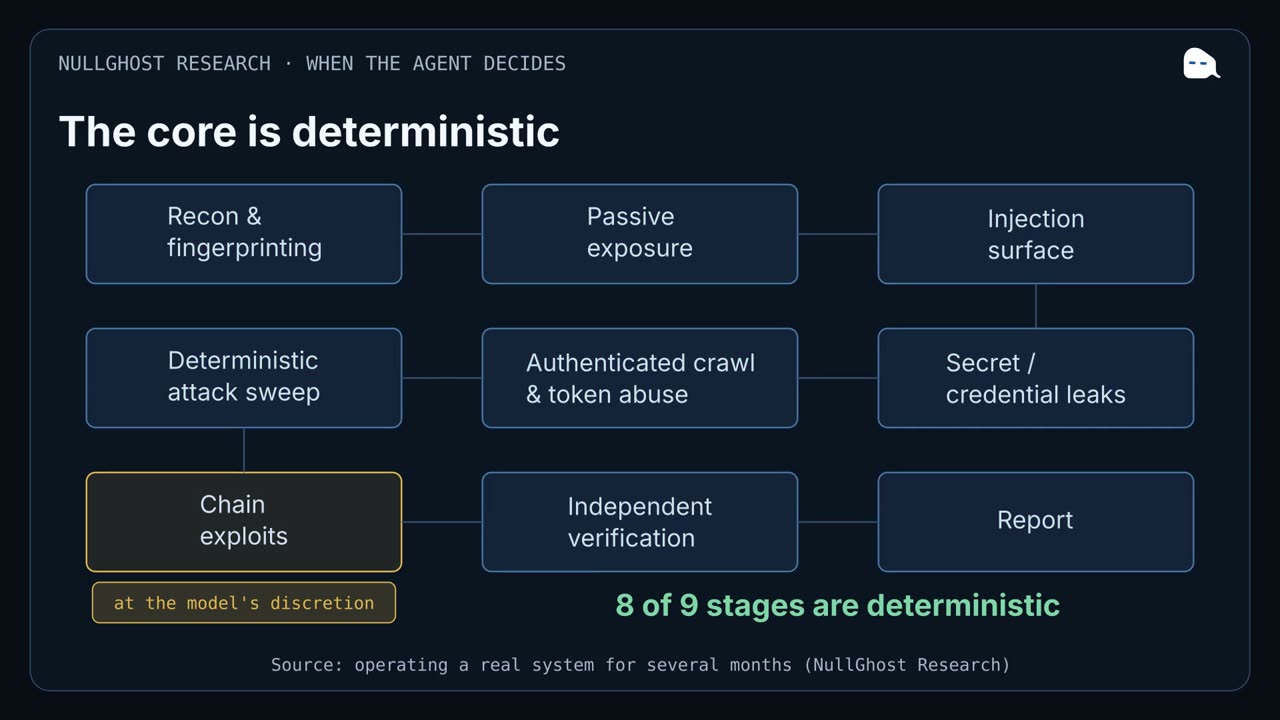
Ten lessons on coverage, verification and silent failures from operating an offensive security agent.
Identity, authorization and delegation: questions to ask before putting AI agents into operation.