Evidence reviewOct 12, 2026
From today's AI to superintelligence
What has been measured, what has been projected and what has been legislated. Each source is tagged by verification level and no date is promised.
What gets delegated to an agent, what gets verified and what cannot be delegated. A four-level ladder and a measurement protocol, with explicit sources and limits.
What the agent makes cheaper is preparation, not accountability. The new risk is false assurance: a polished report that asserts compliance with no evidence behind it.
The delegation ladder sorts a vCISO's activities into four levels using three tests that do not depend on the model. On top of that come six design principles (among them linked evidence, a gate before delivery, the agent as a least-privilege non-human identity and a named human who signs), the likely failure modes and six questions to ask a provider in 2027.
Review of public sources with a cutoff of October 15, 2026. Only the ISC2 study was read at the source; the EU AI Act dates and the Mexican data protection law details come from third-party summaries and need verification. Vendor figures are treated as an indication. The ladder, the principles and the protocol are our own analysis, with no field validation and no figures of our own.
What has been measured, what has been projected and what has been legislated. Each source is tagged by verification level and no date is promised.
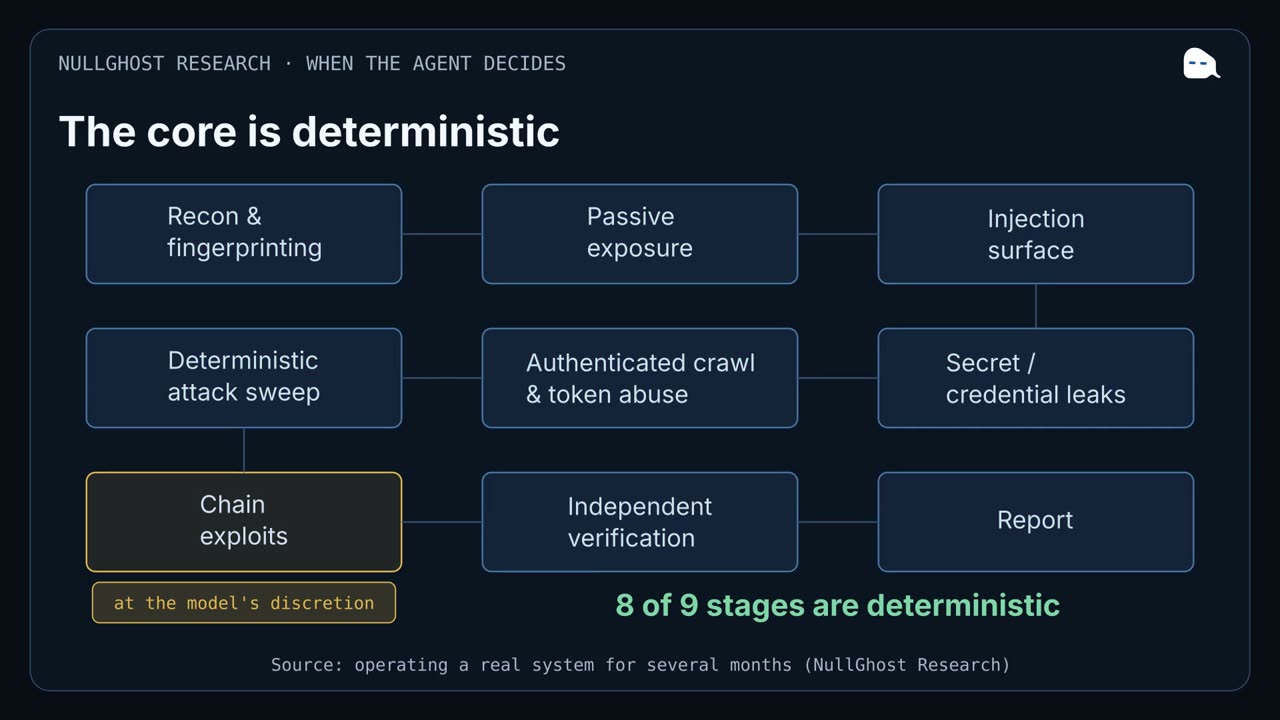
Ten lessons on coverage, verification and silent failures from operating an offensive security agent.
Identity, authorization and delegation: questions to ask before putting AI agents into operation.